About 5th House Astrology
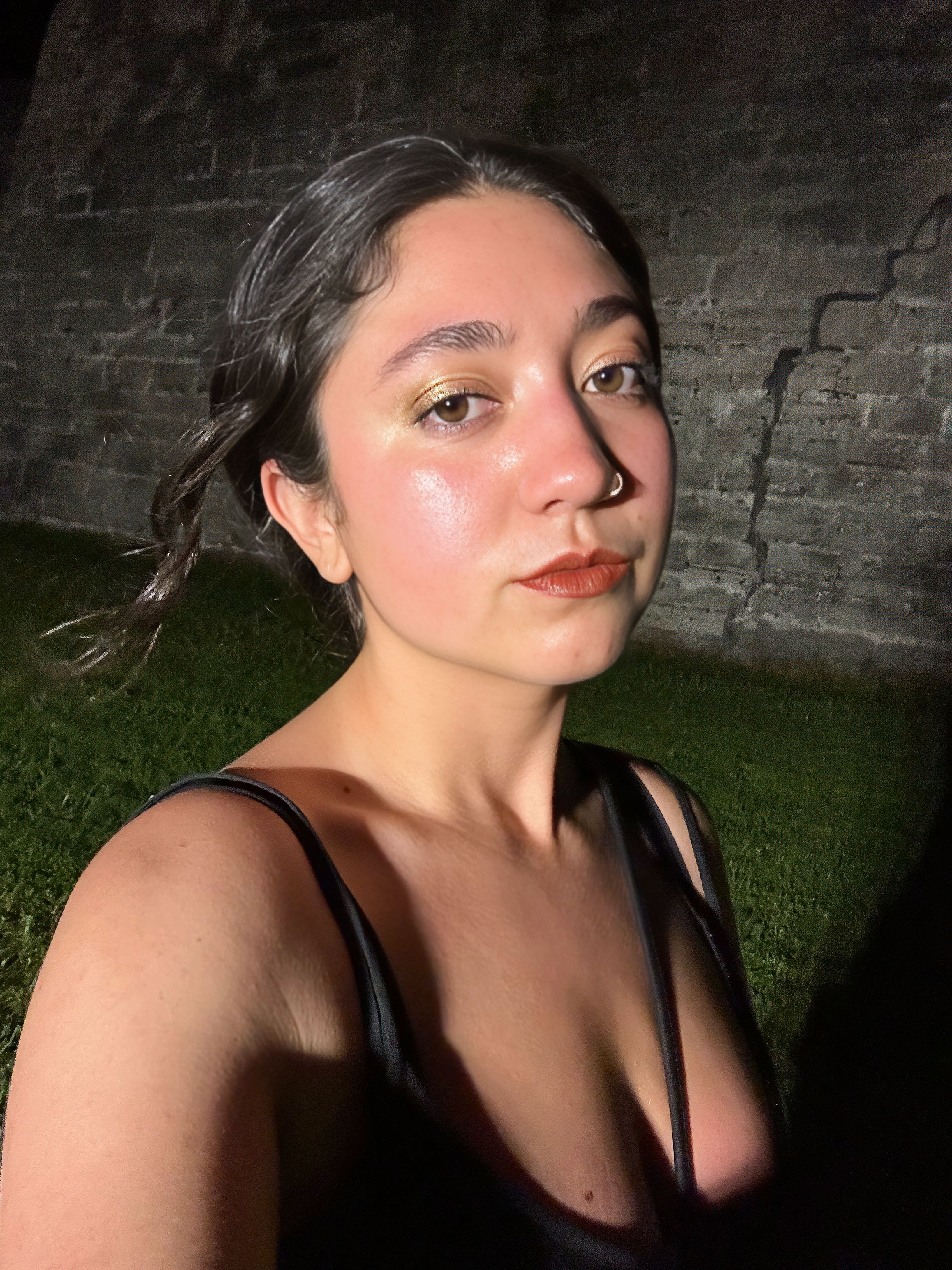
Hello! My name is Michelle.
I am an astrologer and philosopher living in Los Angeles, California.
I have spent the majority of my life studying the people around me. One of my earliest memories is of studying my mother as she sat in our living room chair wrapped in our telephone cord. I’d listen to her phone calls from the stairs, hiding out of sight, trying to parse through what I could gather from her side of the conversation. Sometimes I didn’t know who was on the other line, just that whatever they were talking about was so sacred or secret that my mother would barely talk above a whisper.
On many occasions, I'd ask my mother who was on the phone and what it was they were talking about. Without much discernment concerning what was appropriate to share with a child, my mother exposed me to the interpersonal dynamics of adults and their worlds at a very young age, and all of it fascinated me. My favorite nights were the ones when I’d come home to find her at the dining room table having coffee with a friend. If I was polite and quiet enough, I was permitted to sit at the table and have a cookie with them, where I would observe every expression and mannerism that accompanied each word they spoke.
It wasn’t just my mother and her friends who seemed unable to hold an appropriate boundary with me, though. As young as kindergarten, I can remember teachers allowing me to be present for conversational asides between faculty that I probably shouldn’t have been privy to. By the time I was in high school, it wasn’t uncommon for teachers to confide in me about not just classroom dynamics, but their own personal lives, too.
I was lucky enough to go to a high school that offered the extracurricular study of philosophy and ethics. I naturally gravitated towards philosophy because I was interested in the machinery of decision making. I wanted to understand the greater history of thinking as a whole and apply it to my own mind. The study of ethics more specifically pushed me toward the pursuit of determining what it meant to be Good. My mother, again a large influence, instilled in me what I thought to be an iron moral backbone, so the study of ethics felt like a more formalized pursuit of building on that. When I got to college, I found myself drawn to the Kantian ambition of universal maxims that could bear the weight of generalization. I was determined to define Good Action at all costs, and attempt to live by it. For a young college student, this proved not only to be a comical endeavor, but a cruel one. I started to feel like living my life in constant accordance with Good Action was an impossible endeavor.
While reading the philosopher Iris Murdoch something shifted. Murdoch argues that moral vision is not primarily a matter of choosing correctly in a matter of crisis, but of the quality of attention we bring to the work we do, to other people, and the decisions we make. That quality, she notes, is highest when it is rooted in love. She distinguishes between a moral life built on perfection, and one built on love and truly seeing others as they are. She says that if you do something perfectly, you may do it very well, but if you do something lovingly, your action will supersede perfection immediately.
This distinction changed my life; it changed the nature of my fascination with people. I was less interested in determining what action was necessarily Good, but instead started asking myself: how do people become capable of acting on what we know to be Good through the use of a loving attention? If Goodness requires genuine perception of the other, then self knowledge surely is not a luxury or a byproduct of ethical life, it is a precondition for it. We cannot truly see another person if we cannot truly see ourselves. And most of us, I came to understand with a deep disappointment, cannot see ourselves very well at all.
This conviction drew me to Jung, thereby leading me to start seeing a Jungian analyst while still in college. I was interested in the way Jung describes the unconscious and the parts of ourselves we evade, and how in that evasion we give those unknown parts control over our lives. The concept of individuation struck me as nothing less than the psychological foundation of ethical life, a duty we have to ourselves and to our communities. I was also struck, with some sadness, by the realization that the pursuit of individuation is not a path all people inherently walk. It is an active choice we make, the hero’s journey so to speak, and not everyone will choose to be the hero in their own story. This is not a judgement, but a fact, and with the acceptance of that fact, a new fascination began to take hold: what makes someone willing and able to undertake that journey? How do we make that possible for all people?
Parallel to my academic studies and philosophical pursuits, I became interested in astrology. A surface-level interest at first, it wasn’t until I studied Jung that I realized just how old a tool astrology is and the way Jung himself brought it to the forefront of academic psychoanalytic thought. I quickly became the Astrologer in Residence at my tiny school. Students came to me with problems ranging in severity from compatibility with their roommate to existential life crises.
Throughout my life and across contexts and relationships, people have always confessed and continue to confess to me. Friends have jokingly called me a priest and teachers have said I am disarming in a way that is almost frightening. Confessions often even come from strangers at the grocery store or in doctor’s office waiting rooms, from people of all ages and walks of life. Thus, functioning as this astrological consigliere for my college community was not strange to me, but natural. It was a fun way to exercise a part of my brain that was just being born. It wasn’t until I graduated college that my study of astrology became more formal: taking classes, going to seminars, studying from real teachers, etc. I came to see it less as a dogmatic belief system and more as a symbolic language and tool for individuation work. I found that the astrological archetypes gave the average person a mirror for themselves, a way of seeing their own patterns and tendencies from a slight remove that made reflection less threatening. After some years of study, I began to more seriously read birth charts for friends and coworkers, eventually being referred to those people’s friends and coworkers, and before I knew it, I was a fully functioning professional astrologer.
My spiritual beliefs have changed a lot, too, as I have become an adult. Many people ask me what it is that I believe in exactly if I don't see astrology as dogmatic or my religion. The truth is that I have come to see myself as a mystic in the truest sense of the word. I can't help but to seek knowledge and to feel attracted to the secrets of our stories, but ultimately, through much of that knowledge seeking (including a lot of clumsy fumbling around with many occult practices), I have accepted the fact that Creation is a mystery and as is the Creator. The best thing I can do is humble myself before that mystery. If ever I start to feel a little too confident that I have somehow nailed down a truth about God or the universe, I remind myself of this. Again, I cannot help that it is in my constitution to chase my Creator, however it's in my best interest to remind myself that I am not here to know all of the answers, but rather to submit to the experience that God has created for me. I don't fear the use of the word God even if I can't ever fully know the depth of what it holds. I no longer reject the Catholic upbringing of my childhood in its entirety like I once did. I have come to see my Catholic roots as a real part of my heritage and a tangible connection to my family lineage. And, as all of the best magicians teach us, the best rituals are the ones that you know best. So after many years of naively playing with arts and practices I had no business engaging in, I have simplified my spiritual practice to the tools that feel personally resonant to me, like Astrology, Tarot, and the Holy Rosary.
My astrology practice is my personal effort to create a container that is activating but safe enough to allow clients to set off on the path of knowing themselves. The work doesn't end with astrology, but it can certainly start there. I can say with confidence and from experience that when you actively choose the path of individuation, when you actively choose to turn towards yourself with a loving attention, your life and world will expand in amazing and unexpected ways.
With love,
Michelle